Religion and Morality
-
Very nice vid Spinny. Of course there can be convictions of ours we individually feel as such from empirical individual experiences which may be interesting to investigate and put through experimental controlled repetitions into a scientifical frame. Well done so. But in my opinion Kiley's claim to deem the babies behaviour as right or wrong is a bit unjustified and so ideological. The babies there imo simply choose the impersonated alternatives which seem to open new possiilities, to enlarge their horizons. Often, in fact, infancy is considered as that very moment when all the horizons start and have to open. Personally I'd consider those reactions as lead by this opening pleasure more than an awareness of a good and right which, in themselves, could even not exist at all. Right?

Yes but you do have to take in account the understated self preservation psichology behind the scenes enacted, the babies are picking as you said the alternative which allows more possibilities, but they are also not picking the one which ends them, it's self preservation also, which is the mainframe of what you will consider as good and bad in future too however vague those as concepts do are. Tho I really sympathise with Pastol's text however at a part he is speacking more of logic than morals, as logic can apply in many different times and cultures so you can figure things out, however that is not morals, that is mainly logic adjusting your moral conduct to see which values should be prioritary in the new reality, because you do not have the same code of conduct in a warzone that you have in a peacefull civilized beach but apart from that I really like his text.
For me Religion as a medium group for knowledge has flaws like ulterior agendas, and well it's a composed group so you'll have more individual personality disorders jamming up on your notion of "truth", it's preferable to be a little more anarchic in your process to get your individual "truth".
-
Concerning myr's and past's answers, myr correctly underlines that moral has vague definitions and, even more, it seems to refer to different things in different communities. This could lead us to think that a common denominator could be found elsewhere in something different from the experience of a reality passively received as is.
Past has been very kind with his dad :D. It would have been even too easy to make him notice that human history remembers many episodes which have been named religion wars, not to mention the various witch-hunts and stuff. So religion even less seems up to avoid violence but it could, sometimes, even promote it.
But of course I still owe James an answer because I have left him with a dangling unfinished statement:…while I assume a religious attitude, it doesn't seem to me I'm doing/making the same things I'm doing/making when I assume a moral/ethical attitude otherwise we wouldn't need two different words to denote them: religion/faith and moral/ethics.
This statement remains empty as long as I don't specify what it seems to me I'm personally doing/making when I'm acting those ways and goto see if you all do/make my own operations in the same way or not. Let's see.
In the first place:
when I assume a religious attitude it seems to me I'm moving into a subset of a more generical fideistic attitude which calls for a credence accepted as it's given without verifications or checks. From it we could derive both an axiomatic attitude we are not treating now and a religious/dogmatic attitude we are instead interested in. The language could not be particularly helpful here cause in English and in many other languages I could say for instance:I believe in the GTru portal there's a forum named Religion & Philosophy
and this believing seems dubitative (it seems to me I've seen it/I was in it, I'm not sure but I oppose to the doubt this belief)
or
I believe in god, the spaghetti monster, ladidadi free John Gotti, a soccer team… etc.
and this apparent synonim has not the same meaning at all because it doesn't stem from a doubt but from an unshakeable certainty.
In the religious/dogmatic attitude this unshakeable certainty which has to be accepted without understanding or even trying to understand it is made generally coincide with the revelation of a deity or, more honestly, of an important man or human institution. In both cases though, it requests all the becoming, the differences emerging are adapted to it and sometimes even through complex and ingenious deductive constructions as the ancient middle age theology was.
Secondly:
when I assume a moral/ethical attitude…ahem I will answer to that lata cause I gotta run now

-
If I may, it is well established that the morality of humans is completely changed in a war. Soldiers, along with those trapped in a war zone, do not abide by, nor do they witness, a morality that is anything close to the norm for them. That is exactly the cause of Post-traumatic stress disorder that occurs in so many people directly engaged in a war. I submit that a discussion on morality must be broken into two different discussions when war comes into the discussion. My comments above were made with the exclusion of war time morality. The two do not and cannot exist together. Ask any soldier who has been in heavy combat. Ask any civilian who has been in the midst of a firefight or bombing. Ask yourself, if you have ever experienced war up close and personal. The normal rules are suddenly turned upside down. It was my understanding that this particular discussion was about "normal" morality. That is, a peacetime morality. If we are to bring wartime morality into it, that is a different discussion all together. However, having said that; minus specifics of the battleground, the impetus for wars and the will of a people not in the war zone to promote an ongoing war is probably fair game for this discussion.
-
Yes but you do have to take in account the understated self preservation psichology behind the scenes enacted, the babies are picking as you said the alternative which allows more possibilities, but they are also not picking the one which ends them, it's self preservation also, which is the mainframe of what you will consider as good and bad in future too however vague those as concepts do are. Tho I really sympathise with Pastol's text however at a part he is speacking more of logic than morals, as logic can apply in many different times and cultures so you can figure things out, however that is not morals, that is mainly logic adjusting your moral conduct to see which values should be prioritary in the new reality, because you do not have the same code of conduct in a warzone that you have in a peacefull civilized beach but apart from that I really like his text.
For me Religion as a medium group for knowledge has flaws like ulterior agendas, and well it's a composed group so you'll have more individual personality disorders jamming up on your notion of "truth", it's preferable to be a little more anarchic in your process to get your individual "truth".
Agreed myr!
It's a possible alternative way to see the things. I admit I've not understood the age/(range?) chosen by Kiley for the babies who seemed to me all very young though. Generally very young babies are still in the process of a self and not-self building and have not yet the capability of reintroject the not-self as another possible dfferent self. Important studies on these very problems have been made by Jean Piaget and carried on after him by many other ones ^-^ -
Secondly:
when I assume a moral/ethical attitude…in my opinion language could be instead of great help in denoting the underlying mind activity. This because all the human languages of this planet know an unambiguous verbal form named Imperative…
James! Kiss my lips (right now)!!
 :cool2:
this would be the purest and the harshest of the forms but, since we are tortuous and complex animals, we could also choose a sweeter and enveloping approach:
Jaaamiieeee, hoooneeyyyy would you kiss my lips right nooow? :hug2: :cheesy2: ( :fight: )
Do it like you want, this imperative puts the subject getting it in the classical aut-aut: an unbreakable binary alternative.
It is true she/he might play for time: Nooo, I'm sick, I've forgotten my appointment with the dentist…
But in the end the answer cannot be anything else than a yes or a no. You might now have noticed the imperative makes on its own a thing many of us here deem as very important even from a sexual point of view: the discipline! :police:
At this point James of course will be disciplined answering yes and undisciplined answering no.
When we forget that, in this kind of situations, the imperative was a causating prius (the thing which came before and created all the situation) and we start instead to think to it as a posterius (a thing coming after) to be derived from the situation, in my opinion there we get the good/bad and the moral/ethics with all their differences and difficulties due to the fact that in vain you will search in an "after" what was there instead before. ^-^So said pastol what you say is not wrong because it is obvious in different periods or spaces of our personal story or of the whole mankind history the ethical/moral rules/precepts may change but this shouldn't be a problem cause the moral/values/ethics depend on the prius and can never be derived from the facts (the posterius). A little practical example and de hoc satis for now.
I could slightly complify my imperative:
James! Kiss my lips right now otherwise I will spank you!! NOOOOOOOOOOOO!
James! Kiss my lips right now otherwise I will not spank you!! YEEEEEEEEEEEES! :cheesy2: :cheers: :cheesy2: :cheers: -
Pastol, I used war as contrast but you might have subtler adaptations like prejudice as an example, people very usually bend morals or adapt them, the important is to have a stable core and you would function even with an unstable moral core, and well the "normal" well normal as in average… I shiver to think what statistics might tells us about society average moral; but yes one thing are thought another is action, I understand your train of logic.
Agis Piaget studies based on his kids are a tad to biased since the upbringing has nothing to do with the average upbringing, however theoretically it's interesting. And my guess is that he was thinking pleasure (libido) = good and destrudo = bad... rather crude I know, I wonder what Jung would think? :blink:
Mainly religious thought is arched by a pretense of spiritual path which is allegories and rites which explain the mythology, so it's dogmatic and fixated and more in an alter "superego" proxy (God), meanwhile ethic thought relies on doubt cinycal philosophy and questioning of reality phenomena, so it's more flexible and relatable to the "individual ego" I.
I :love: this topic
-
Agis Piaget studies based on his kids are a tad to biased since the upbringing has nothing to do with the average upbringing, however theoretically it's interesting. And my guess is that he was thinking pleasure (libido) = good and destrudo = bad… rather crude I know, I wonder what Jung would think? :blink:
He let alone Lacan et al. myr :hot2: Better to automoderate me otherwise Dax will spank us all and that one is a big bear :crazy2:
Good objection again though myr bias and poverty of the sample. Piaget can be considered as a pioneer though and he doesn't compare with the other ones for a number of reasons imo.
Moreover I could find a couple of arguments more for a disagreement between his thought and mine but we would really end off topic there. If you know him well you could open another topic and I will follow you as far as I can :hug2: -
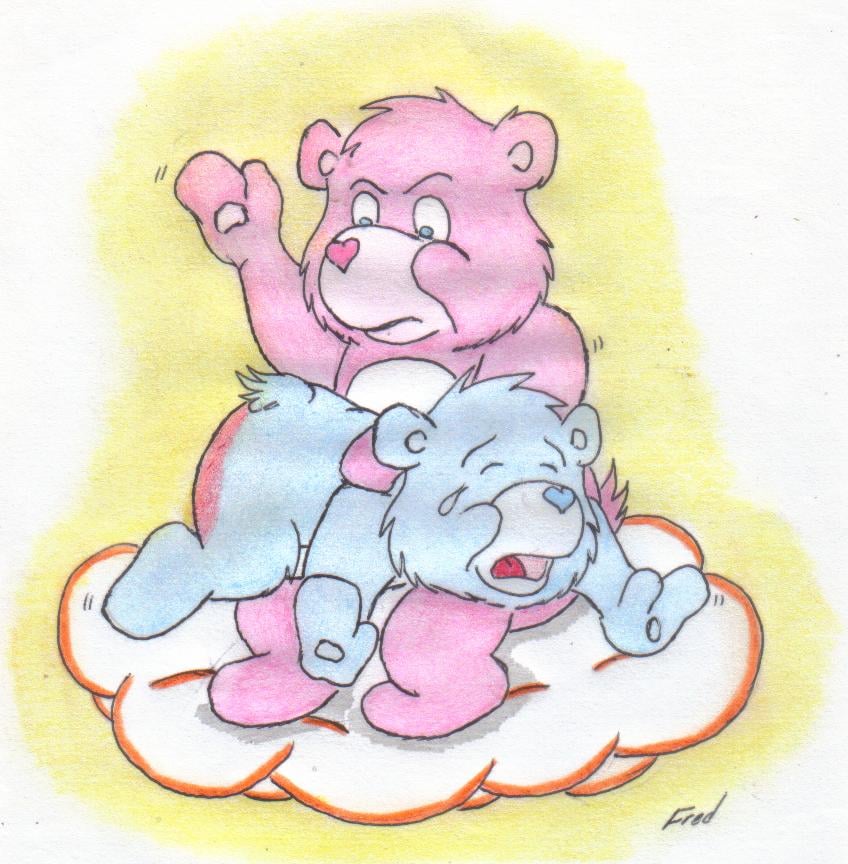
Better to automoderate me otherwise Dax will spank us all and that one is a big bear :crazy2:
No need for automoderation, agis! But in case anyone needs a good bear spanking, just call! :fight:
-
@Dax:
No need for automoderation, agis! But in case anyone needs a good bear spanking, just call! :fight:
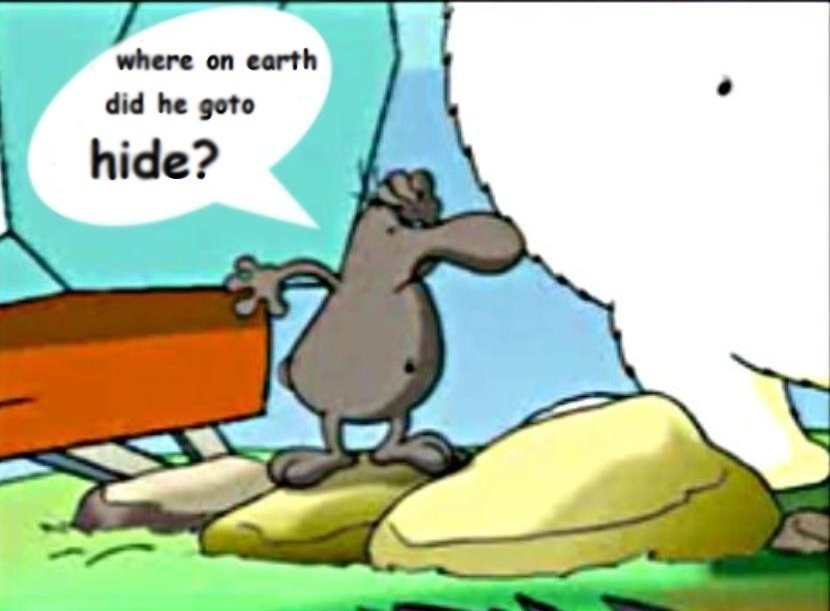
:crazy2: :crazy2: noooooo noooooo don't spank poor ol' ign… ahem innocent agis mole !!!
let's fuck instead!! :cheesy2:
butt just a moment ???
-
No, really I don't understand how you can be so elusive surface mammals
;D. Anyway after this failed attempt of "against nature" ( :hehe: ) intercourse between the yummy young dax bear and the ol' mangy agis mole, to the original Jamie's question I would answer summarizing:Religion and moral are 2 different things cause we originally make them differently with our mind activity using then, coherently, 2 different words to denote them.
We make religion/dogmatism choosing a not commonly/generally shared point of reference which, once chosen, has to be left untouched as is adapting all the "becoming" to it.
We make moral with the initial emisson of imperative(s) whose foundative statute gets lost engendering as a consequence the impossible attempt of going to search it/them amongst its/their consequences.
Once made this way these 2 different attitudes, nothing forbids and, as a matter of fact,it has been very often done, to mix and to make them overlap.
Very often, for instance, the religious/dogmatic attitude has used and still uses the moral attitude for the build up of dubious but compulsory precepts I'm sure, for our personal stories, we all know more or less. In this case we willingly denote this constructs as "moralism".
So said though the myr's and pastol's considerations are not devoid of validity cause the consequences of series of imperavites can be checked more or less consciously against other kinds of attitudes (for instance an historical attitude), recognised useful by a majority and, as a consequence, deemed as a Moral with a capital M. -
wrong post sorry should go slower in writing mpf pth

-
Personally I'd consider those reactions as lead by this opening pleasure more than an awareness of a good and right which, in themselves, could even not exist at all. Right?"
The fact that 80% of these infants demonstrated some kind of feelings towards the "helpful" puppets as opposed to the "unhelpful" puppets may indicate an inherent attraction towards these helpful behaviors concomitant with an inherent dislike of the unhelpful behaviors. As people are mostly attracted to things which are pleasing to them, your observation would naturally be the correct one.
Since feelings form the foundation of all moral thoughts — and all babies have feelings (they laugh and cry) — this Yale study may say something quite profound about the origins of human morality.
-
Personally I'd consider those reactions as lead by this opening pleasure more than an awareness of a good and right which, in themselves, could even not exist at all. Right?"
The fact that 80% of these infants demonstrated some kind of feelings towards the "helpful" puppets as opposed to the "unhelpful" puppets may indicate an inherent attraction towards these helpful behaviors concomitant with an inherent dislike of the unhelpful behaviors. As people are mostly attracted to things which are pleasing to them, your observation would naturally be the correct one.
Since feelings form the foundation of all moral thoughts — and all babies have feelings (they laugh and cry) — this Yale study may say something quite profound about the origins of human morality.
No Spinny I think the foundation of moral is simply the imperative. Then so said of course,starting from that, you can build upon and introduce feelings or other kind of possible constructions including the possibility the imperative can be found in an ex-post objectivity thanks to the intervention of deity/ies. If moral was based upon the feelings this kind of statement couldn't resist to all the counterfactuals concerning the numerous cases when feelings have not dictated and still don't dictate moral but immoral behaviours :).
-
No Spinny I think the foundation of moral is simply the imperative. Then so said of course,starting from that, you can build upon and introduce feelings or other kind of possible constructions including the possibility the imperative can be found in an ex-post objectivity thanks to the intervention of deity/ies. If moral was based upon the feelings this kind of statement couldn't resist to all the counterfactuals concerning the numerous cases when feelings have not dictated and still don't dictate moral but immoral behaviours :).
And that is basicly what happens for many reasons, before all the imperative and action-reaction develpoment are known to come after the emotional response development, you hit a baby he/she cries and he/she does not know yet what is reflection in mirror or that an hidden object has not vanished from existence, this has been studied in the babies psy and explains most of the psy disturbia like mental illness also, morals are a concept and immorality lies inside it because it's only an adaptation of regular morality, the hormonal core, the emotions core (limbic system) is older than the logic core (lobes) in the brain, and your hypocampus are actually worked up to save memory emotionally, what happens in the maturity of a mind is that your superego (conscience) the logic core, refreins your ego (emotional needs) the limbic, in order to maintain social moral as pertained by the developped imperative… however this is by no means a peacefull conflict, or else we wouldn't have mental illness, actually the ego and the limbic are so powerfull that most of the times you know you are making things wrong and illogic and you blame it on hormones...and there lies a whole million dollar question why is it so easy to bend moral, if not because the imperactive actually is taking birth and operating in an emotional perspective or mainframe. Other Question is the mental preposition of the psycho and sociopath there the cut of emotional connection create an associal imperative... so I suppose we would have to find a consensus to all psychic disturbia and trauma to be logic, in order to find the birth of morals in the human psy.
-
No Spinny I think the foundation of moral is simply the imperative. Then so said of course,starting from that, you can build upon and introduce feelings or other kind of possible constructions including the possibility the imperative can be found in an ex-post objectivity thanks to the intervention of deity/ies. If moral was based upon the feelings this kind of statement couldn't resist to all the counterfactuals concerning the numerous cases when feelings have not dictated and still don't dictate moral but immoral behaviours :).
And that is basicly what happens for many reasons, before all the imperative and action-reaction develpoment are known to come after the emotional response development, you hit a baby he/she cries and he/she does not know yet what is reflection in mirror or that an hidden object has not vanished from existence, this has been studied in the babies psy and explains most of the psy disturbia like mental illness also, morals are a concept and immorality lies inside it because it's only an adaptation of regular morality, the hormonal core, the emotions core (limbic system) is older than the logic core (lobes) in the brain, and your hypocampus are actually worked up to save memory emotionally, what happens in the maturity of a mind is that your superego (conscience) the logic core, refreins your ego (emotional needs) the limbic, in order to maintain social moral as pertained by the developped imperative… however this is by no means a peacefull conflict, or else we wouldn't have mental illness, actually the ego and the limbic are so powerfull that most of the times you know you are making things wrong and illogic and you blame it on hormones...and there lies a whole million dollar question why is it so easy to bend moral, if not because the imperactive actually is taking birth and operating in an emotional perspective or mainframe. Other Question is the mental preposition of the psycho and sociopath there the cut of emotional connection create an associal imperative... so I suppose we would have to find a consensus to all psychic disturbia and trauma to be logic, in order to find the birth of morals in the human psy.
Yes myr these are all possible consecutive considerations imo. The possibility of seeing the moral problem either from a collective or from an individual point of view with all those social misfits many of us might have still experienced; the possible bonds with psy and neurophysiological considerations (even if we must admit that already a philosopher like Leibniz was not persuaded by them for a number of reasons). I would add besides, from an essentially social point of view, the juridical side of the moral where the good becomes innocent and the bad/evil becomes guilty. After all, much before the mankind could know anything about psy or neurophysiology, moral started to come into the limelight in the form of juridical collective imperatives like the so said commandaments or ancient codes like Hammurabi's. There you could think that already since those times , a selection of the imperatives series pushed its way for the necessity of regulating and damping the social conflicts between gropus and/or societies of improving complexity
-
If moral was based upon the feelings this kind of statement couldn't resist to all the counterfactuals concerning the numerous cases when feelings have not dictated and still don't dictate moral but immoral behaviours."
Seeing cooperation as an evolutionary trait recognizable by infants suggests why all moral thought takes the form of feelings rather than rationally motivated thinking.
 Feelings are in the long-term more beneficial to us and to our concept of morality precisely because we have limited control over their emotional effects. This limited control introduces an element of unexpectedness to what we experience, and people invariably learn more from unexpected things in life than they do from the expected ones.
 -
Spintendo the uncertainty fugue is a both sides card, it allows more possibilities as allows more ends, tho I grant that it's on an emotional and nonlogic mainframe of a baby so a good and valid hypothesis, however cooperation is not entirely supported by evolution actually in order to cooperate you brain process and overall capabilities get lower, as an individual people work better than in groups, however in order to build or live socially cooperation is vital, aniway food for thought.
Agis I won't go to judicial moral since for me law and rights are very far apart from actual justice or moral, they act as a very flawed proxy, there are more loop holes and unmoral laws even for the period which they belong, than I rather know or care about… laws can also be fairly unsocial and unpopular to be socially moral, law takes birth in control over property, I am still going around why there even exist some laws, and then you have this mayhem of morals the individual anarchism or the society dystopia.. it's chisms all around, what matters is where does morality has root on, and yes it shows on all this things, but that is the show, we want the mechanism... and we already know that is all around "we want this as a basis and we don't want this as a basis" because experience says so... but what more forms the process? I'm going for a combination rather than only a basic thing ( science tell us that easy and simple route is the right one, but science has been fucking that up a lot so I'm believing this to be fairly more complex) I wonder too if anyone cares to ramble upon the origin of religion eheheh someone needed a daddy figure?
-
If moral was based upon the feelings this kind of statement couldn't resist to all the counterfactuals concerning the numerous cases when feelings have not dictated and still don't dictate moral but immoral behaviours."
Seeing cooperation as an evolutionary trait recognizable by infants suggests why all moral thought takes the form of feelings rather than rationally motivated thinking.
Feelings are in the long-term more beneficial to us and to our concept of morality precisely because we have limited control over their emotional effects. This limited control introduces an element of unexpectedness to what we experience, and people invariably learn more from unexpected things in life than they do from the expected ones.Spinny!!
 :cheesy2: you have made me remember this so fine and romantic thing of my youth! :hug2:
hxxp://www.youtube.com/watch?v=CyBcHUe4WeQ
Feelings nothing more than feeeeeelings ….

But even in those times I had realized a thing: in respect with the same song I could put myself into different attitudes.
If I put myself in an emotional attitude it seemed to me the song was very close, sorta totally implemented into my subjectivity with exclusion of everything else.
But if I put myself into a rational attitude it seemed to detach and going back to belong to an objectivity where you could even deem it with some harsh adjective like mawkish or soppy.So, what do you/I/we all do/make when we act/think in an emotional/sentimental way or in a rational way?
-
Spintendo the uncertainty fugue is a both sides card, it allows more possibilities as allows more ends, tho I grant that it's on an emotional and nonlogic mainframe of a baby so a good and valid hypothesis, however cooperation is not entirely supported by evolution actually in order to cooperate you brain process and overall capabilities get lower, as an individual people work better than in groups, however in order to build or live socially cooperation is vital, aniway food for thought.
Agis I won't go to judicial moral since for me law and rights are very far apart from actual justice or moral, they act as a very flawed proxy, there are more loop holes and unmoral laws even for the period which they belong, than I rather know or care about… laws can also be fairly unsocial and unpopular to be socially moral, law takes birth in control over property, I am still going around why there even exist some laws, and then you have this mayhem of morals the individual anarchism or the society dystopia.. it's chisms all around, what matters is where does morality has root on, and yes it shows on all this things, but that is the show, we want the mechanism... and we already know that is all around "we want this as a basis and we don't want this as a basis" because experience says so... but what more forms the process? I'm going for a combination rather than only a basic thing ( science tell us that easy and simple route is the right one, but science has been fucking that up a lot so I'm believing this to be fairly more complex) I wonder too if anyone cares to ramble upon the origin of religion eheheh someone needed a daddy figure?
Well myr if we had to derive moral simply from imperatives I wouldn't see difficulties in admitting what you have written and the very thing that a moral/law is neutral with respect to a "justice" whatever we want to denote with this concept. If we still lived in Hammurabi's times we would be liable to the hands cut just for belonging to such a site and in commandaments succession the precept of god's sanctification comes much before the one prescribing to honour your parents ;D.
Concerning the origin of religion an interesting thing could be that historically the religious/dogmatic attitude has been made antecede other attitudes. Especially the scientific one. Tell me more about the daddy bit though ^-^ -
Hmm we have to consider the spectrum and range of emotions agis.. indifference and detatchment are very close to the anallitic point of logic however with different mechanisms, not that I'm going around logic as part of human emotions, I'm just wondering if you are not rather in the similitude of a more detatched perspective of Feeelingsss lalala than a logical analysis of the music and content, because even that analysis is based in a world of emotion written by and for that world… so that comprehension of romaticism is needed in it to be logical.
The Daddy issue is the curse of the most typical God, you want it to help you and you blame him when things don't work...






Hello! It looks like you're interested in this conversation, but you don't have an account yet.
Getting fed up of having to scroll through the same posts each visit? When you register for an account, you'll always come back to exactly where you were before, and choose to be notified of new replies (either via email, or push notification). You'll also be able to save bookmarks and upvote posts to show your appreciation to other community members.
With your input, this post could be even better 💗
Register Login